Traditional Costumes, Regional Heritage, and Learning Spanish
Carnival, or Entroido as it’s known in Galicia, is a time of vibrant celebrations, deep-rooted traditions, and fascinating costumes that reflect the region’s cultural diversity. From the choqueiro costume in A Coruña to the elaborate peliqueiros of Laza, these disguises provide a window into Galician history and identity. Let’s explore the most iconic costumes of Galician Carnival and discover how you can incorporate this lively tradition into a Spanish lesson.
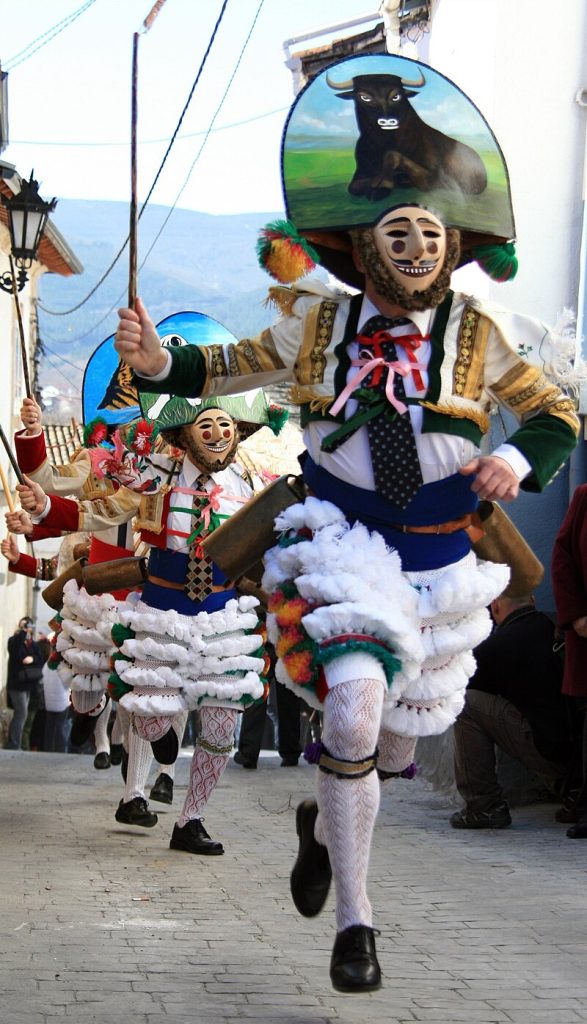
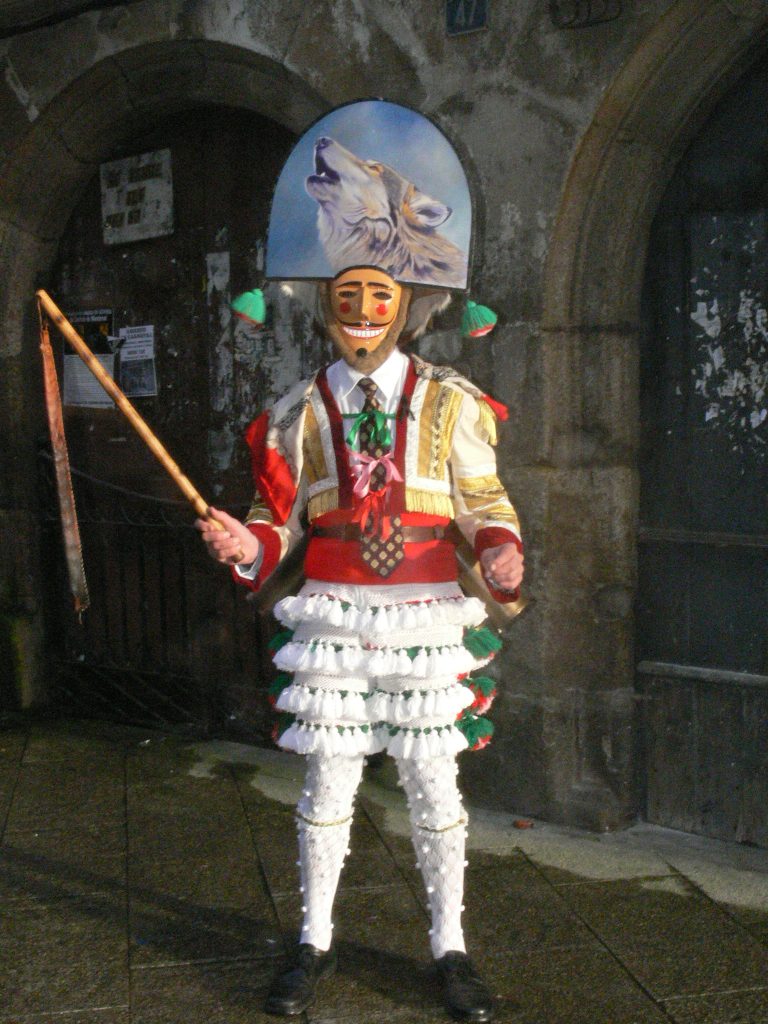
Hailing from Laza in the province of Ourense, the peliqueiros are central figures in the local Entroido. Their striking costumes feature elaborate masks, colourful ribbons, and cowbells attached to their waists. As they parade through the streets, the peliqueiros symbolise authority and tradition, keeping order with their whips while adding an air of mystery to the celebration.
The cigarróns from Verín, also in Ourense, are known for their intricate wooden masks and jingling bells. Their costumes are highly decorated with embroidery and sashes. Acting as both enforcers and entertainers, the cigarróns ensure that everyone participates in the festivities while adding an element of theatricality to the Carnival.
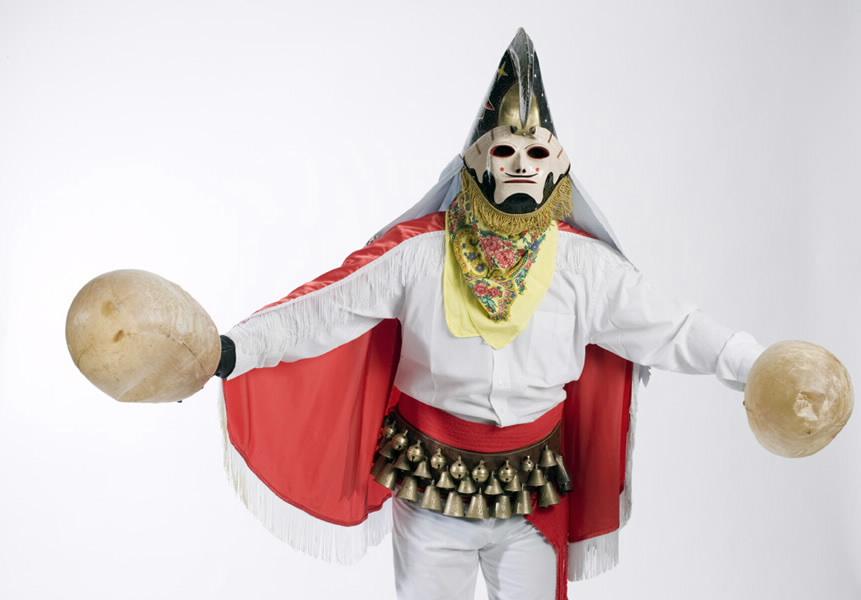
The pantallas are the hallmark of Xinzo de Limia, home to one of the longest-running Carnival celebrations in Spain. These characters wear white shirts, red pants, and colourful masks, and they carry inflated pig bladders. Their role is to ensure everyone dresses up for Carnival, chasing and playfully “punishing” those who fail to join in.
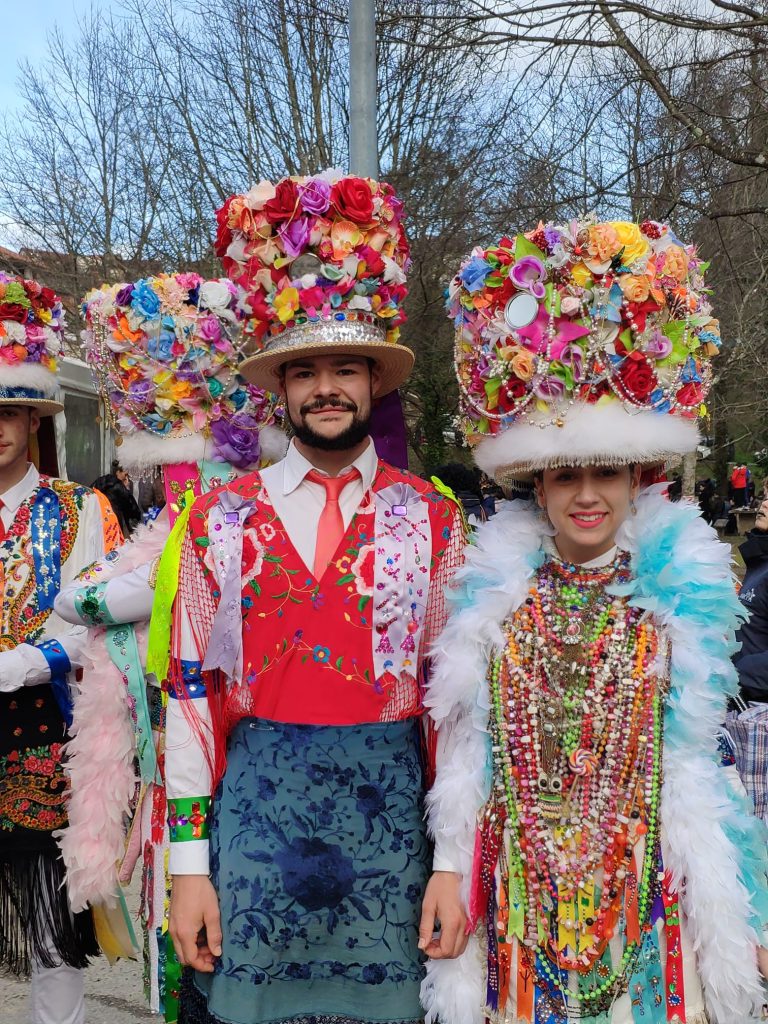
These elegant figures come from Pontevedra and the surrounding villages. The madamas (ladies) and galanes (gentlemen) dress in traditional, formal attire adorned with lace, ribbons, and embroidery. They perform symbolic dances that celebrate unity and the arrival of spring, bringing grace and sophistication to the festivities.
Boteiros
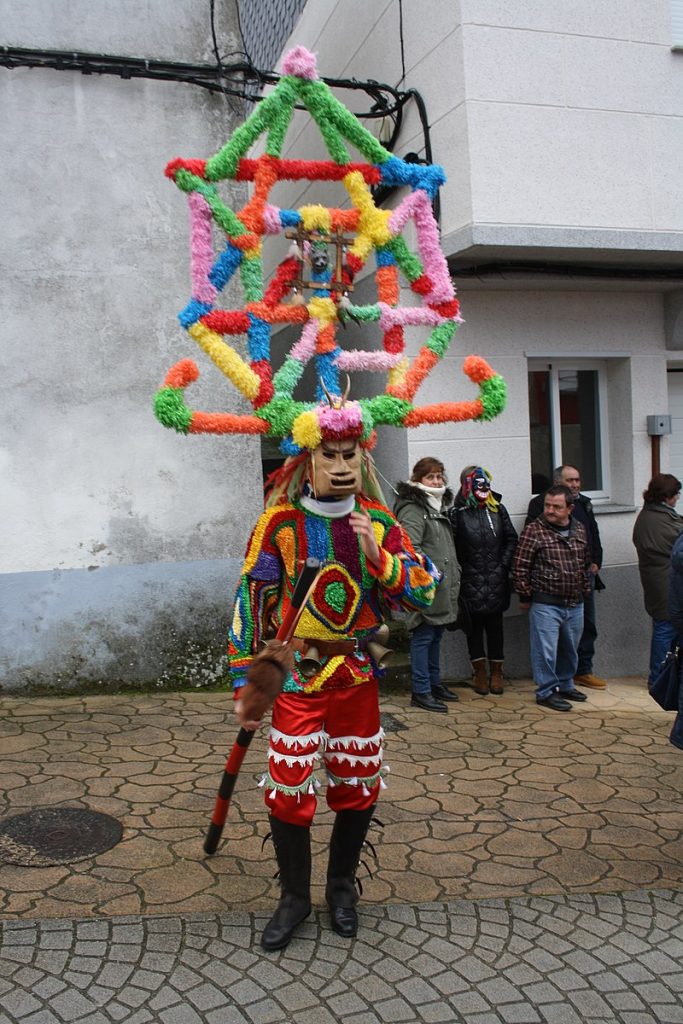
Found in the region of Viana do Bolo, the boteiros wear vibrant costumes with large, horned masks that represent the fight against evil spirits. They are the leaders of the parades, dancing energetically to open the path for the troupes, while their costumes and movements inspire awe among spectators.
Choqueiros
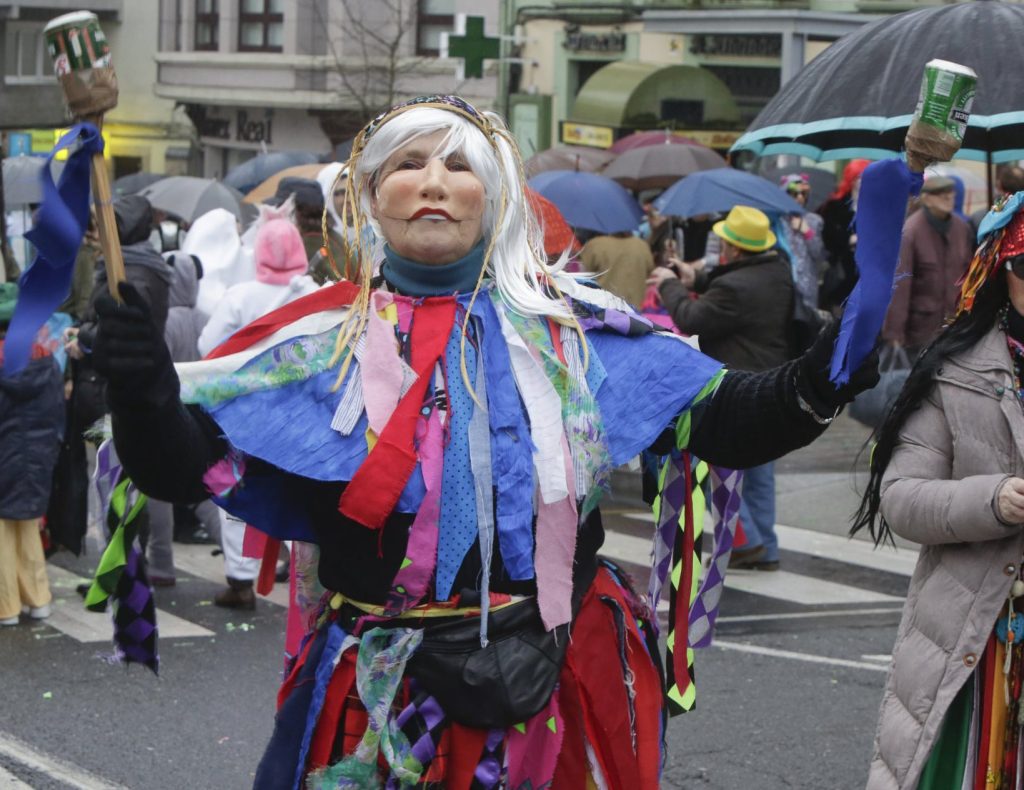
Originating from the city of A Coruña, the choqueiros represent a playful and irreverent spirit. Their costumes are often mismatched, with old clothes, masks, and humorous accessories. Traditionally, choqueiros take to the streets to mock societal norms and authority figures, bringing laughter and chaos to the Carnival atmosphere.
The Burial of the Sardine: Saying Goodbye to Carnival
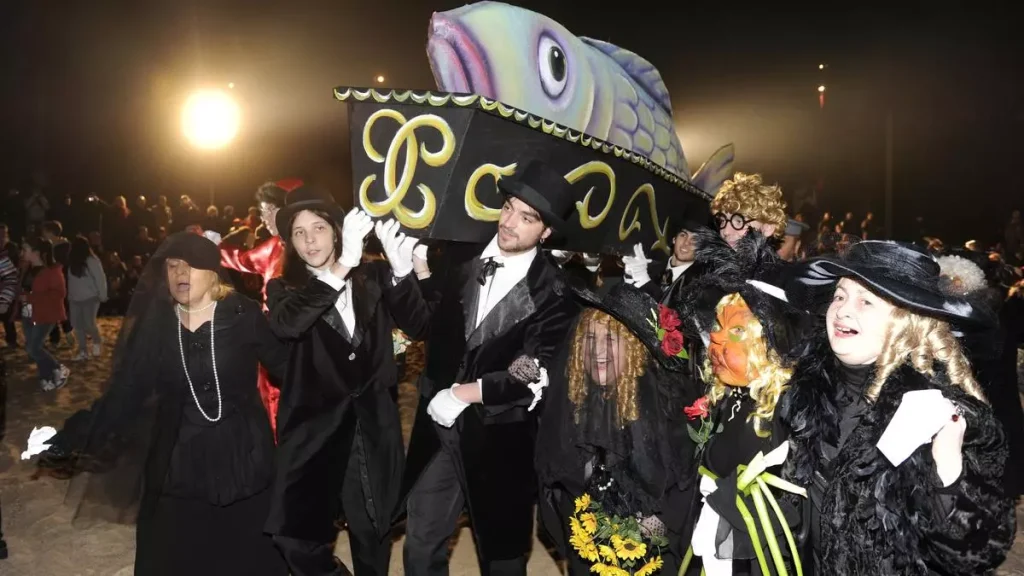
The Entierro de la Sardina is the sombre yet symbolic conclusion to the Carnival festivities. Celebrated across Galicia, this ritual involves a mock funeral for a large effigy of a sardine, which represents the excess and indulgence of the Carnival season. The sardine is carried through the streets in a theatrical procession, often accompanied by wailing mourners in black veils. Finally, it is burned or buried, marking the transition to Lent and a time of reflection. This ritual provides a poignant contrast to the wild celebrations of the previous days, reminding participants of the cyclical nature of life and festivities.
With its colourful costumes, unique characters, and dramatic rituals, Galician Carnival is an unparalleled cultural experience that captures the spirit of the region.